
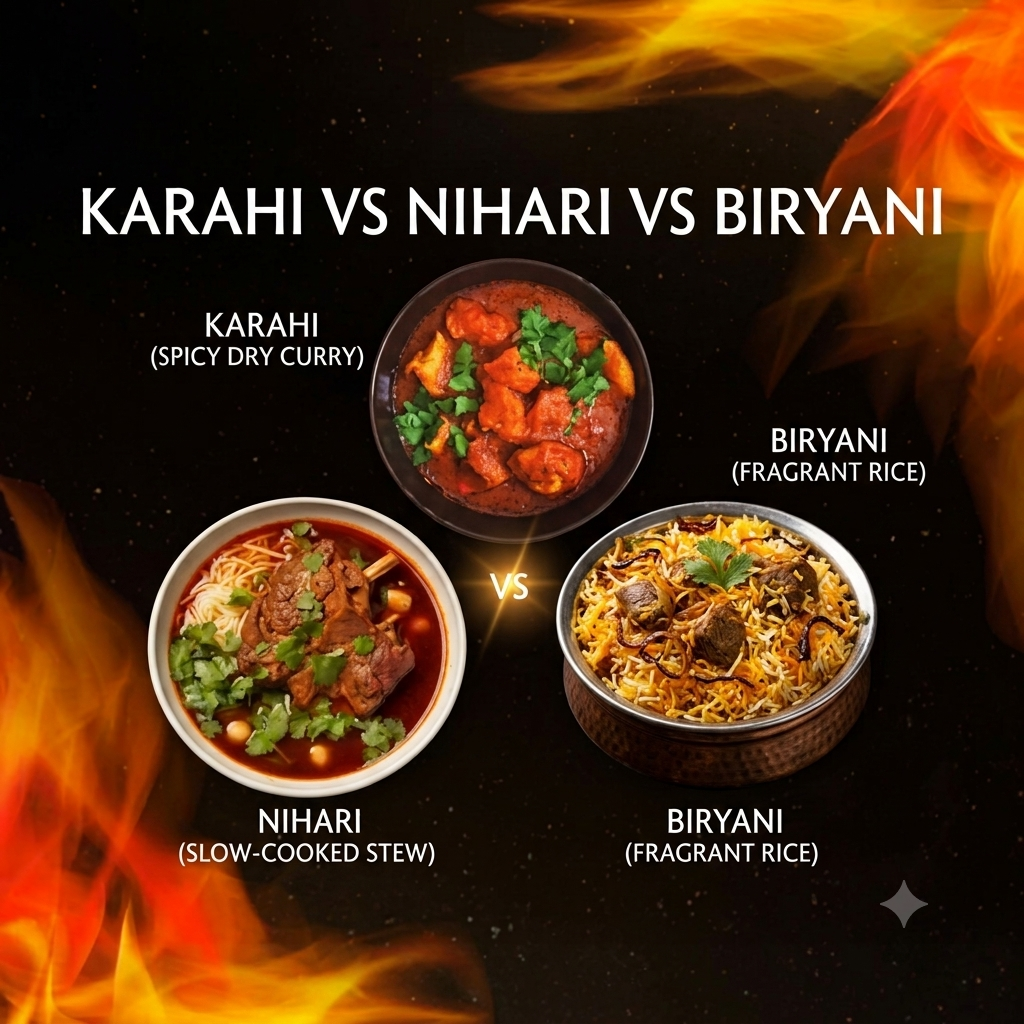
Anyone browsing an Indo-Pak menu across Australia, whether in Sydney, Melbourne, or a suburban takeaway, has likely paused over the same question. The comparison of nihari vs biryani vs karahi comes up constantly among Australian diners exploring South Asian cuisine, because these three dishes sit at the very heart of Pakistani and North Indian cooking, yet each one tells a completely different story on the plate.
Understanding what sets them apart is not just trivia for curious foodies. It genuinely helps Australian diners choose a dish that matches their mood, their spice tolerance, and how much time they have to enjoy it.
What Is Nihari and Why Does It Take So Long to Cook
Anyone asking “what is nihari” is really asking about patience as much as flavour. Nihari is a slow-cooked meat stew, traditionally made with lamb shanks, simmered for several hours until the meat falls apart with a spoon.
The dish originated in the Mughal era and was often eaten as a hearty breakfast after morning prayers, which explains its rich, warming character. It relies on a deep, slow-building spice base rather than sharp, immediate heat, with flavours that develop gradually rather than hit all at once.
Key characteristics of nihari include:
· A thick, glossy gravy with a deep reddish-brown colour.
· Meat that is extremely tender and slow-cooked.
· A garnish of fresh ginger, coriander, green chilli, and a squeeze of lemon.
· A subtle, rounded heat rather than a sharp one.
What Is Karahi Curry and Why Is It So Popular?
If nihari is about patience, karahi is about speed and boldness. Anyone wondering what karahi curry is should picture a dish cooked quickly over high heat in a wok-shaped pan, also called a karahi, using tomatoes, ginger, garlic, and green chillies as the backbone of the sauce.
Typical features of a good karahi include:
· A thick tomato-based sauce with visible chunks of ginger and chilli.
· A tangy, slightly sharp heat.
· Minimal use of cream or heavy dairy.
· A rustic, homestyle presentation, often served in the karahi itself.
Where Biryani Fits into the Indo-Pak Table
Biryani is arguably the most recognised of the three dishes among Australian audiences, and for good reason. Rather than being a curry at all, biryani is a layered rice dish that incorporates fragrant basmati rice with marinated meat, caramelised onions, and a blend of whole spices such as cardamom, cinnamon, and star anise.
Nihari vs Biryani vs Karahi Spice Profiles Compared
| Dish | Cooking Style | Texture | Spice Profile |
|---|---|---|---|
| Nihari | Slow-simmered for hours | Tender, fall-apart meat | Deep, warming, subtle heat |
| Karahi | Quickly cooked over high heat | Thick, chunky sauce | Tangy, sharp, moderately spicy |
| Biryani | Layered rice cooked with the dum method | Fluffy rice with tender meat | Fragrant, aromatic, mild to medium heat |
Comparing these three side by side highlights the broader differences between Pakistani and Indian food, since regional variations in spice blends, cooking time, and technique often trace back to the same core methods, even as they are reinterpreted for Australian tastes.
Understanding the Difference Between Pakistani and Indian Food
While nihari, biryani, and karahi are enjoyed in both Pakistan and India, subtle regional differences do exist, and these often carry over into how they are prepared in Australia as well. These are genuinely some of the best-known Indo-Pak dishes explained side by side, and recognising these small distinctions makes it far easier for Australian diners to appreciate the depth and history behind each recipe, rather than viewing them as simply variations of curry.
Saanjh Brings These Flavours to Your Table
Understanding nihari, biryani, and karahi is one thing, but truly experiencing them, cooked slowly and properly with authentic technique, is another matter entirely. At Saanjh, we prepare every dish with genuine respect for these traditional methods, from the long-simmered richness of nihari to the bold, quick-fired character of a proper karahi and the fragrant layers of a well-made biryani.
For Australian diners keen to explore the real nihari vs biryani vs karahi debate through their own taste buds rather than simply reading about it, Saanjh brings these Indo-Pak classics to life with the authenticity & care they truly deserve. Book your table now for a memorable dining experience.
Frequently Asked Questions
Where can I try authentic Nihari, Biryani, and Karahi in Australia?
Dedicated Indo-Pak restaurants such as Saanjh specialise in preparing these dishes using traditional methods, offering Australian diners an authentic experience without needing to travel overseas.
Are these dishes suitable for the Australian spice preference?
Most restaurants adjust spice levels to suit local tastes, and diners can usually request a milder or spicier version depending on their comfort level.
Is karahi or biryani better for a family gathering in Australia?
Biryani is often preferred for larger gatherings since it is a complete meal, while karahi works well as a shared dish alongside naan or rice.
Are nihari, biryani, and karahi halal in Australia?
Many Indo-Pak restaurants across Australia, including Saanjh, prepare these dishes using halal-certified meat, though it is always worth confirming with the restaurant in question.